The road to The Drinkable River
Interview with Joan Reinders
Click here for this interview in Dutch | Klik hier voor dit interview in het Nederlands
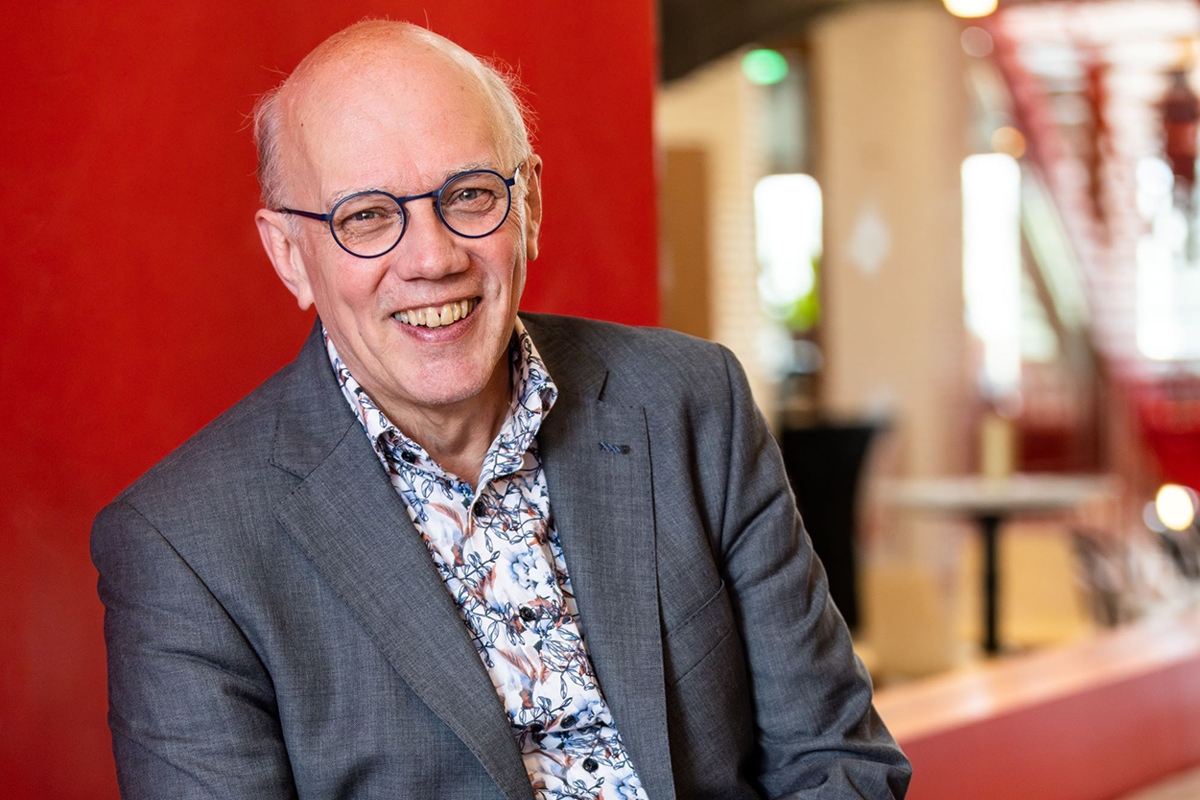
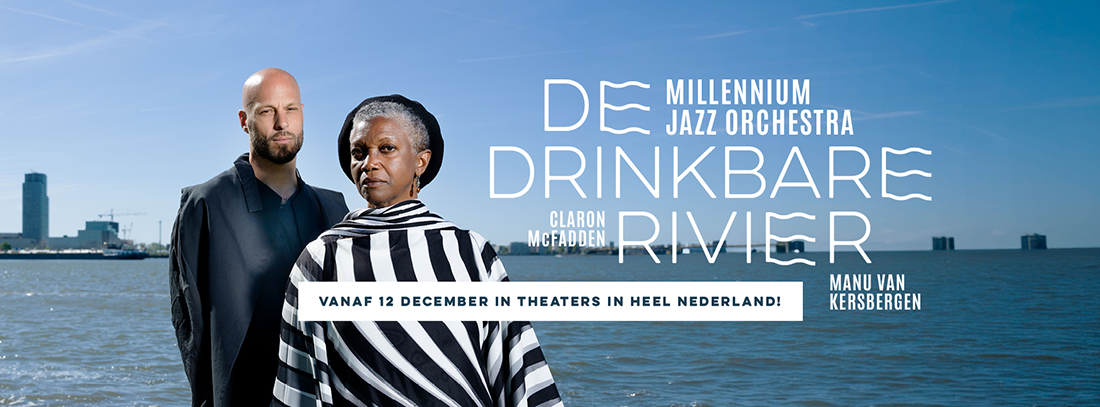
For over forty years, composer and conductor Joan Reinders has been synonymous with high-quality big band productions with the Millennium Jazz Orchestra. That alone is reason enough for a conversation, were it not for Reinders’ most ambitious project to date starting on December 12 at Theater Kerkrade: The Drinkable River. A musical narrative about the encounter between the river and humanity, featuring soprano Claron McFadden and spoken word artist Manu van Kersbergen. The performance is inspired by the book Drinkable Rivers by Li An Phoa; Joan Reinders wrote all the music and the libretto, and the texts are by Marieke Meischke. In the theaters, the narration is supported by images from award-winning nature filmmakers Arthur de Bruin and Dick Harrewijn.
Joan Reinders lives in Hardenberg, but we meet on a chilly Monday afternoon in a café in Zwolle, not far from the still not very drinkable river IJssel.
The Drinkable River: How did this project start?
“First and foremost, it’s because I am very concerned about nature, about how bad the situation actually is, with the whole climate change.” Additionally, composing and arranging is what I love to do the most. And I’ve been thinking for a while: what if I could combine those two things? Wonderful if I can achieve that.”
“I had already met Li An Phoa once before, during a previous project about water. That was a lot of fun. We had two classical pianists – two grand pianos – for the big band back then. Li An had collaborated on that project. I had created a suite from the water cycle, and for each of the six parts, I had one minute recorded by different people. Li An Phoa was one of them.”
“I found it incredibly inspiring how she, in her own way, a kindly activist, draws attention to the fact that a river should be so clean that you can just drink from it. That she walks the entire river from start to finish and asks various people to join her for a day to draw attention to that claim. I thought: If I can create a project out of that, then I have a very beautiful theme that is close to my heart and for which I can compose an entire performance.”
Crafting
But then the inspiration for the first piece of music you write down. What creates a certain association with a chord progression, a melody, or a harmony?
“Look, as a composer, you sometimes face the problem: how do you start?” When you create an extensive arrangement of a jazz standard, you already have a given: a melody and chords to play with. As a composer, you don’t have that at first. But because I was going to set texts to music for this project, that was my starting point. Marieke Meischke has created beautiful texts for De Drinkbare Rivier. A beautiful story. That was the beginning for me. That text is leading. How do I compose the music for that? She recorded those texts, and then I listen intently to her cadence. How does she pronounce it? Where should I place accents and where not? Underline the syllables. And from there, along with the atmosphere of the text, I start writing a melody. Then I see which mode fits with it. Major, minor, a Dorian scale, or something else; you can find all sorts of things to go with that. That’s how I start crafting, and then a song or composition comes out, which I can then color to my heart’s content with the entire palette that a big band has, with extra woodwinds and so on.”
Claron McFadden and Manu van Kersbergen
How linear has the process been in this case? Because there is a beginning and an end to the story, as if it were a river. Do you compose from beginning to end, or do you first have a middle section or a central theme?
“It’s nice to compose it a bit chronologically, but it’s not necessary.” We also recorded a trailer early on, at LantarenVenster. At that point, I already had an idea of what it should roughly be, and I started with that specific piece for the trailer. It doesn’t have to be chronological, but it’s easy to keep track of not having three ballads in a row or too much of the same thing so that there’s good variation.”
The story, spoken word texts, and libretto for The Drinkable River were written by Marieke Meischke at the request of Joan Reinders, partly in English and partly in Dutch.
“First and foremost, I was just incredibly happy because it had been a dream of mine to write a libretto—especially because it was for Claron McFadden.” I was touched by the book Drinkable Rivers by ecologist Li An Phoa, in which her global walks along rivers and the contact with those rivers are central. My lifestyle has also changed because of it. I live by the Oude IJssel, and I have started walking a lot there, and I have started swimming again, also in the IJssel. I was born on a boat, so I thought, “This really suits me perfectly.” Of course, I also read more about the state of the rivers, but I didn’t delve too deeply into it. I didn’t want it to become an activist pamphlet. The idea behind the story remained primarily human and romantic but also social. The relationship between humans and nature.”
“I have recorded all the texts in a dramatic tone. Joan distilled melodies from these and used them as a guide. In it, you hear the leitmotifs: The River and The Human each have their own recognizable leitmotif in this story. My idea was that there should be a dialog. Because the cause of all the suffering, the reason the river is no longer drinkable, is humans. In doing so, I very intuitively came across spoken word artist Manu van Kersbergen. Claron is the voice of The River, from its origin in the mountains, from snow and ice, and she begins her first piece of singing with, ‘I am white.’ From the source to the outflow into the sea, that is her journey. Then the human comes on stage, a solo piece by Manu, and then dialogs with Claron.
“The texts are not moralizing.” We learn from each other in dialog. Before the River flows into the sea, it must come to an agreement with Humanity. So she suggests couples therapy. Then I wrote myself into it as the therapist, resulting in a unique, sometimes humorous and enlightening triologue, after which The River and The Human come together.
At what point did the vocalists come into the picture? Did they give a new twist to your work?
“It seems like the text to translate is missing. Could you please provide the text you’d like me to translate? Quite quickly already. I really had my eye on Claron McFadden. I had once worked with her for a Leonard Bernstein program. That was very difficult at the time with the rights from the Bernstein family, and in the meantime, Claron’s schedule had completely filled up, so she could only do two concerts in the end. Laura Bohn did the other concerts; she’s also a fantastic singer, which turned out very well. So I had worked briefly with Claron and wanted to do another project with her. I thought this was perfect for her. A fantastic classical singer with a very ‘slender’ voice. When she sings opera, it doesn’t have a heavy vibrato. I am very charmed by that. She understands jazz, and she is very technical; she can handle anything.”
“So I was going to create a story with a contrast between river and human. Claron I had now for the river, and Marieke and I wanted to add a spoken word artist next to it for the human. Marieke suggested Manu van Kersbergen. I didn’t know him yet, but it turned out to be an amazing combination: a beautiful classical soprano, with a bit of a hip-hop-like, spoken word pop artist—and the jazz big band in between.”
Filmmakers with the music
How much do you really need to explain to them in such a project? Are you going to sit down with them separately?
“For Manu, who doesn’t read music, I made a computer recording with a kind of roadmap of what happens and where he has space for his text. With Claron, she asks for the sheet music and the computer recording and practices it.”
And how much do you have to explain to your band? What do you expect from the orchestra in terms of feedback on a theme like The Drinkable River?
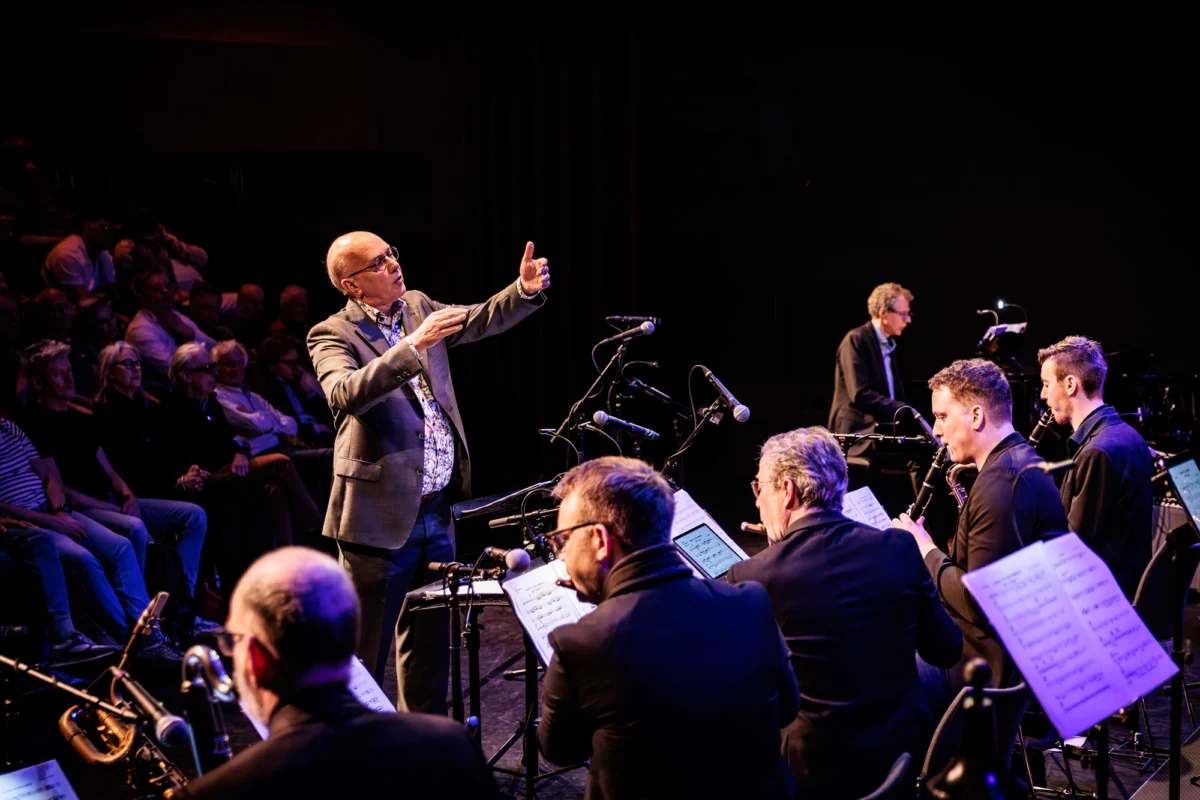
“It can help the musicians if they know what it’s about, but in principle, it’s just a professional big band. You put the music in front of them, they play it, and the balance comes naturally. That’s something they are very good at. For the soloists, it is of course important that they know the story well. That they know what it’s about and can convey it well.”
Do you also write certain solos or pieces specifically for the soloists in the orchestra? You have known some of them for quite a while, after all.
“Yes. There are many good soloists in the orchestra. I try to give everyone a role as much as possible, and at the same time, I look at the shape of the program and which soloist would fit well in a particular piece. I immediately incorporate that into the composition process.”
Usually, filmmakers look for music to accompany their visuals, but you looked for filmmakers to accompany the music.
“Yes, that was really a trigger for the underwater filmmakers too!” They found that to be a very innovative way of working. I got in touch with them again this morning. They deliver beautiful images, and I get so happy when I see them. During the performance, adjusted per segment, we therefore show homemade recordings. Deliberately kept very calm, so it doesn’t distract from the music.”
Letting go
How did you ever start composing? What drove you?
“I started as an arranger—just taking a jazz standard like Body and Soul and arranging it. I had my first lessons from Frans Elsen and then Jerry van Rooyen. They provided very valuable tips based on what I had written, with good examples included. It is so important that you get good input right away. I just started writing after that. Where the urge comes from, I don’t know; I’ve always had the feeling: I want to write.”
“Thad Jones was a great source of inspiration, and in that vein, Bob Brookmeyer and Bill Holman. I listened to that a lot. At some point, you have to let that go, because otherwise it comes back too much in your writing. I don’t write like Bach either, and you shouldn’t want that, but I do listen to him a lot because his melodies are so well constructed. So beautiful! I also try to incorporate that polyphony into my writing. And I still return to certain techniques from my early days, which I try to deepen. Furthermore, I listen to everything from very old to very modern; I try to be like a sponge.”
A certain color
Then: the Millennium Jazz Orchestra; your orchestra.
“When I started working with them 40 years ago, it was an existing, very good hobby orchestra. I have actually shaped it since I took over, with the idea: I want to write, and if I have my own orchestra, I can develop in that. In 1990, we started a concert series in Deventer, which gave me the opportunity to write for the orchestra and the guest soloists. That went from a trickle to a torrent, to stick with the water theme.”
Who is your sounding board? Is the orchestra that?
“The orchestra is definitely sometimes a sounding board, because you write it and hear it back immediately. That can be very inspiring. Sometimes it’s also good to take a step back. That you just think you’ve created something fantastic, and it turns out later, uh… well, good, but not so special.”
In the way you work with the Millennium Jazz Orchestra, would you say there is a typically Dutch, perhaps even Overijsselian aspect to it? Which truly distinguishes it from a big band from the West or an American big band?
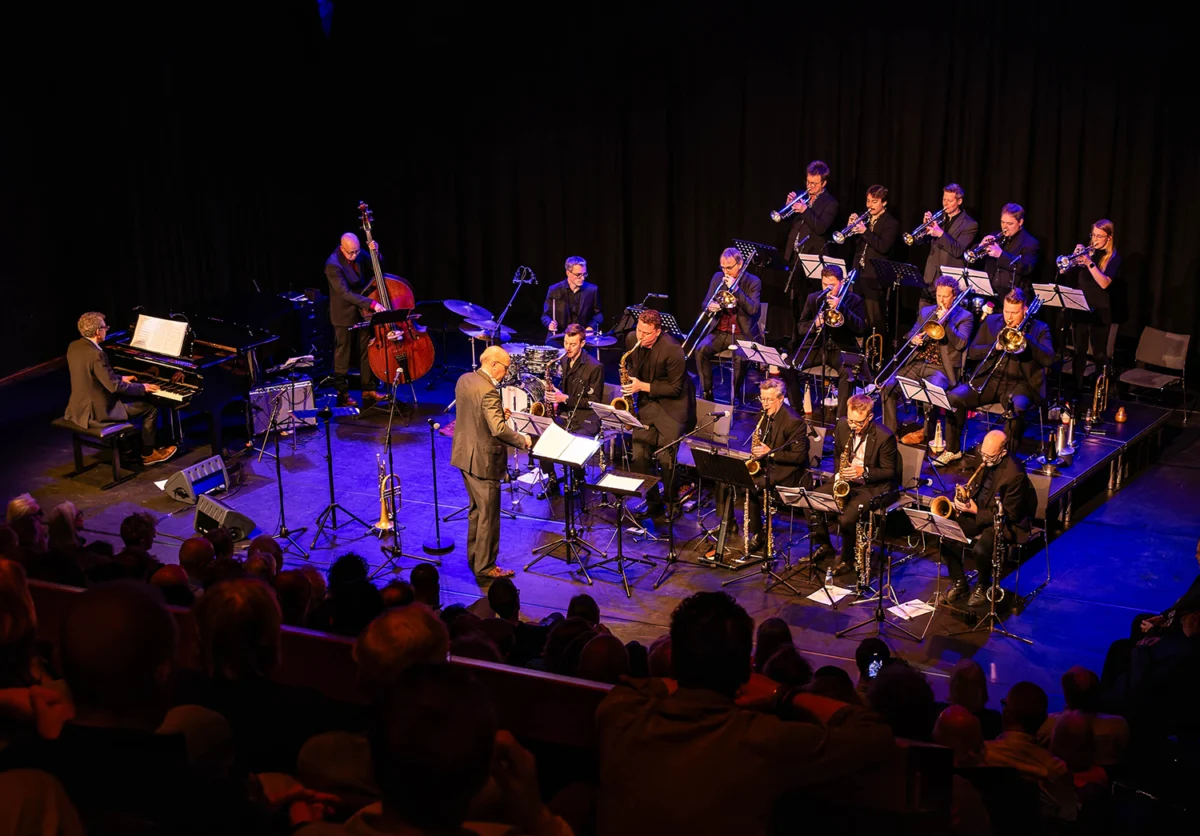
“We distinguish ourselves as a big band because I mainly write and arrange all the music myself. As a result, it has truly become my orchestra; it takes on a certain character. And in recent years, I’ve been doing more and more thematic projects. That was also due to examples from classical music, which made me want to write more descriptively to create more program music. That started with my suite, Octopus, in eight parts, where I tried to translate all the parts into a composition. I don’t see other big band composers doing that much. In that sense, I think we are distinctive in that regard. And then there is my fondness for paying attention to nature. Those things together make it so that we—in all modesty—have our own position in the Dutch scene.”
“My son sometimes calls the orchestra my life’s work.” I never saw it that way myself, but actually, it is. I hope to be able to keep composing for as long as possible.”
Good finances
You are the thinker, the driver, the inspirer, you lead the orchestra and you handle all those projects. Some people already have trouble overseeing the work with a trio. Do you ever lie awake at night because of it?
“No, because I’ve learned: if you wake up early in the morning, you always see things more bleakly than they actually are! Once I realized that, I thought, ‘everything will be fine.’ But of course, it requires a lot of investment. Last year, for example, we had a great plan, but then it went wrong. In the previous round of subsidies, we were just below the cutoff line, both with the municipality of Zwolle and with the Performing Arts Fund. Then the province also says no. In two years, the next round will be, and right now I am intensively working on writing a new, solid plan. Then we can really build an organization and I can fully focus on the artistic part. Two years ago, I stopped teaching, so I had more time for my orchestra.”
When you came out with Bleeding Amazonia in 2022, I thought it was very clever that you worked with someone like Lilian Vieira, because that way you inherently reach a different audience. Are you that strategic in your thinking?
“I am becoming more so, actually forced to, because you need good finances to get a project off the ground. But with Lilian Vieira, it happened very coincidentally. I had saxophonist Lucas Santana in the orchestra at that time. I told him that I wanted to do a Brazilian project sometime. Such fantastic music comes from there. He said that I should then ask Lilian. And then I thought of putting the Amazon at the center. With that idea, I went to Lilian and immediately there was a complete connection.”
Overijssel
How do you view the turbulent student scene in the Randstad from your home and workplace in the East?
“Most of the musicians in the band come from Amsterdam, but we place great importance on regional education and talent development. We have established the Millennium Jazz Academy and a youth big band, with which we have already completed three projects and will undertake another in the spring. That is youth from the east and the north, especially the north of Overijssel. That is ultimately the goal; to give youth and talent from there a chance. Trumpeter Rémi Keupink and saxophonist Luuk de Vries, who studied in Zwolle, were thus able to join our orchestra when spots became available. Rémi is now one of our star soloists!”
“We started a big band festival in Zwolle last January. That was sold out, a real success. The second edition of this Big Band & Beyond festival will follow in January 2028, again in the interest of talent development and giving youth a chance. In the afternoon program, a fantastic youth big band will be playing. Incredibly fun to see, that enthusiasm they bring. That is very contagious.”
And further, what are the plans after The Drinkable River?
“Of course, I already have ideas for future projects. I would like to make an album in the vein of the 2025 CD Concertos, so instrumental. I have a very good bass clarinetist in mind for that, Joris Roelofs. He is very musical and we get along well. Marieke Meischke and I will also be collaborating on a next, even bigger project: De Zeven Zeeën. I give her complete freedom. She writes beautiful lyrics. Then I take on my role to compose the music around her texts and spoken recordings. Once again for two soloists.”
The Drinkable River will premiere on December 12 at the Parkstad Theater in Kerkrade. For the complete concert schedule and all other information about Joan Reinders and the Millennium Jazz Orchestra. Check out the trailer below.
Text by Mark van Schaick, with contributions from Lara van Schaick
Photo credits: Nienke de Groot
De weg naar De Drinkbare Rivier
Interview in Dutch | Interview in het Nederlands
Al ruim veertig jaar staat componist en dirigent Joan Reinders garant voor bigbandproducties van hoge kwaliteit met het Millennium Jazz Orchestra. Dat is op zich al reden genoeg voor een gesprek, ware het niet dat Reinders’ meest ambitieuze project tot dusver op 12 december van start gaat in Theater Kerkrade: De Drinkbare Rivier. Een muzikale vertelling over de ontmoeting tussen de rivier en de mens, met sopraan Claron McFadden en spoken word artiest Manu van Kersbergen. De voorstelling is geïnspireerd door het boek Drinkbare Rivieren van Li An Phoa; Joan Reinders schreef alle muziek en het libretto en de teksten zijn van de hand van Marieke Meischke. In de theaters wordt de vertelling ondersteund door beelden van prijswinnende natuurfilmers Arthur de Bruin en Dick Harrewijn.
Joan Reinders woont in Hardenberg, maar we spreken elkaar op een gure maandagmiddag in een café in Zwolle, niet ver van de nog niet zo heel drinkbare rivier de IJssel.
De Drinkbare Rivier: waar is dit project mee begonnen?
“Allereerst met dat ik heel erg ben begaan met de natuur, met hoe slecht het er eigenlijk voor staat, met de hele klimaatverandering. Daarnaast is componeren en arrangeren wat ik het liefste doe. En ik dacht al een poosje: als ik die twee dingen nou kan combineren? Prachtig als ik dat kan bereiken.
Ik had Li An Phoa al eens eerder ontmoet, bij een vorig project over water. Dat was erg leuk. We hadden toen twee klassieke pianisten – twee vleugels – voor de bigband staan. Aan dat project had Li An meegewerkt. Ik had van de waterkringloop een suite gemaakt, bij elk van de zes delen had ik één minuut laten inspreken door verschillende mensen. Li An Phoa was er daar één van.
Ik vond het ontzettend inspirerend hoe zij op haar manier, vriendelijk activistisch, aandacht vraagt voor het feit dat een rivier zo schoon zou moeten zijn dat je er gewoon uit kunt drinken. Dat ze die hele rivier van begin tot eind afloopt en allerlei mensen vraagt om eens een dag mee te lopen om zo aandacht te vragen voor die bewering. Ik dacht: als ik daar nou een project mee kan maken, dan heb ik een heel mooi thema dat mij nauw aan het hart ligt en waar ik een hele voorstelling bij kan componeren.”
Knutselen
Maar dan de inspiratie voor het eerste stuk muziek dat je noteert. Wat zorgt voor een bepaalde associatie met een akkoordenreeks, een melodie of een harmonie?
“Kijk, als componist zit je soms met het probleem: hoe begin je? Als je een uitgebreid arrangement maakt van een jazzstandard heb je al een gegeven: een melodie en akkoorden waar je mee kunt stoeien. Als componist heb je dat eerst niet. Maar omdat ik voor dit project teksten op muziek ging zetten, was dat mijn aanknopingspunt.”
“Marieke Meischke heeft prachtige teksten gemaakt voor De Drinkbare Rivier. Een mooi verhaal. Dat was voor mij het begin. Die tekst is leidend. Hoe componeer ik daar de muziek bij? Ze heeft die teksten ingesproken, en dan luister ik geconcentreerd naar haar cadans. Hoe spreekt ze het uit, waar moet ik accenten leggen en waar niet? Lettergrepen onderstrepen. En van daaruit, samen met de sfeer van de tekst, begin ik een melodie te schrijven. Vervolgens kijk ik welke modus daarbij past. Majeur, mineur, een Dorische ladder of iets anders; daar kun je van alles bij vinden. Zo ga ik knutselen en dan komt daar een song of compositie uit, die ik vervolgens naar hartenlust kan kleuren met het hele palet dat zo’n bigband heeft, met extra houtblazers en noem maar op.”
Claron McFadden en Manu van Kersbergen
Hoe lineair is het proces in dit geval geweest? Want er zit een begin en eind aan het verhaal, als ware het een rivier. Componeer je dan ook van begin naar eind, of heb je eerst een middenstuk of een centraal thema?
“Het is fijn om het een beetje chronologisch te componeren, maar het hoeft niet per se. We hebben ook al vroegtijdig een trailer opgenomen, in LantarenVenster. Toen had ik al wel een beeld van wat het ongeveer zou moeten worden, en bij dat specifieke stuk voor de trailer ben ik begonnen. Het hóeft dus niet chronologisch, maar het is wel makkelijk om in de gaten te houden dat je niet drie ballads achter elkaar krijgt of te veel van hetzelfde hebt, dat er goede variatie in zit.”
Het verhaal, spoken word-teksten en libretto voor De Drinkbare Rivier is op verzoek van Joan Reinders geschreven door Marieke Meischke, deels in het Engels, deels in het Nederlands.
“Allereerst was ik gewoon ontzettend blij, want het was een droom van mij om een libretto te mogen schrijven – en vooral omdat het voor Claron McFadden was. Ik werd geraakt door het boek, Drinkbare Rivieren van ecologe Li An Phoa, waarin haar wereldwijde wandelingen langs rivieren en het contact mét die rivieren centraal staan. Mijn levensstijl is er ook door veranderd. Ik woon bij de Oude IJssel en ik ben daar veel gaan wandelen en ik ben weer gaan zwemmen, óók in de IJssel. Ik ben op een boot geboren, dus ik dacht: dit past echt helemaal bij mij. Natuurlijk heb ik ook meer over de toestand van de rivieren gelezen, maar ben daar verder niet heel diep ingedoken. Ik wilde niet dat het een activistisch pamflet zou worden. Het idee achter het verhaal bleef toch voornamelijk menselijk, romantisch, maar ook maatschappelijk. De relatie tussen de mens en de natuur.
“Ik heb alle teksten ingesproken, op een dramatische toon. Joan heeft melodieën hieruit gedestilleerd en deze als leidraad genomen. Daarin hoor je de leidmotieven: De Rivier en De Mens hebben in dit verhaal ieder een eigen, herkenbaar leidmotief. Mijn idee was dat er een dialoog zou moeten komen. Want de veroorzaker van al het leed, de reden dat de rivier niet meer drinkbaar is, dat is de mens. Daarbij kwam ik, heel intuïtief, uit bij spoken word-kunstenaar Manu van Kersbergen. Claron is de stem van de De Rivier, vanaf het ontstaan in de bergen, uit sneeuw, ijs, en begint haar eerste zangstuk ook met: ‘I am white’. Van de bron tot het uitvloeien in de zee, dat is haar reis. Dan komt de mens op het toneel, een solostuk van Manu en vervolgens dialogen met Claron.
“De teksten zijn niet moraliserend. We leren van elkaar in dialoog. Voordat De Rivier uitstroomt in de zee, moet ze tot een overeenkomst komen met De Mens. Dus zij stelt partnertherapie voor. Vervolgens heb ik mijzelf erin geschreven, als de therapeut, wat resulteert in een unieke, soms geestige en verhelderende trialoog, waarna De Rivier en De Mens tot elkaar komen.”
Op welk punt kwamen de vocalisten in beeld? Gaven zij een nieuwe draai aan je werk?
“Vrij snel al. Ik had Claron McFadden echt op het oog. Ik had ooit één keer met haar gewerkt, voor een Leonard Bernstein-programma. Dat ging toen heel moeizaam met de rechten vanuit de familie Bernstein en ondertussen was de agenda van Claron helemaal volgelopen, waardoor ze uiteindelijk maar twee concerten kon doen. Laura Bohn deed de andere concerten; ook een fantastische zangeres, wat heel goed uitpakte. Ik had dus wel kort gewerkt met Claron en wilde graag nog eens een project met haar doen. Ik vond dit geknipt voor haar. Een fantastische klassieke zangeres met een hele ‘slanke’ stem. Als zij opera zingt, heeft het geen zwaar vibrato. Daar ben ik erg van gecharmeerd. Ze begrijpt jazz en ze is heel technisch, ze kan alles hebben.”
“Ik ging dus een verhaal maken met een tegenstelling tussen rivier en mens. Claron had ik nu voor de rivier, en Marieke en ik wilden daar een spoken word-artiest naast zetten, voor de mens. Marieke stelde Manu van Kersbergen voor. Ik kende hem nog niet, maar het bleek een te gekke combinatie: een mooie klassieke sopraan, met een beetje een hiphop-achtige, spoken word popartiest – en de jazzbigband daartussenin.”
Filmers bij de muziek
Hoeveel moet je ze echt uitleggen bij zo’n project? Ga je apart met ze zitten?
“Voor Manu, die geen noten leest, heb ik een computeropname gemaakt met een soort routebeschrijving van wat er gebeurt en waar hij de ruimte heeft voor zijn tekst. Bij Claron is het zo dat ze de bladmuziek en de computeropname vraagt en het instudeert.”
En hoeveel moet je uitleggen aan je band? Wat verwacht je van het orkest aan feedback op zo’n thema als De Drinkbare Rivier?
“Het kan de musici helpen als ze weten waar het over gaat, maar in principe is het gewoon een professionele bigband. Je zet de muziek voor hun neus, ze spelen het en de balans ontstaat vanzelf. Dat is wat zij heel goed kunnen. Voor de solisten is het natuurlijk wel belangrijk dat ze het verhaal goed kennen. Dat ze weten waar het over gaat en dat goed over kunnen brengen.”
Schrijf je ook bepaalde solo’s of stukken specifiek op de persoon van de solisten in het orkest? Je kent een aantal van hen immers al een tijdje.
“Ja. Er zijn veel goede solisten in het orkest. Ik probeer zoveel mogelijk iedereen een rol te geven en tegelijkertijd kijk ik naar de vorm van het programma en welke solist goed in een bepaald stuk zou passen. Dat neem ik meteen mee in het compositieproces.”
Meestal zoeken filmers muziek bij hun beelden, jij zocht filmers bij de muziek.
“Ja, dat was voor de onderwaterfilmers ook echt een trigger! Dat vonden zij juist een hele vernieuwende manier van werken. Ik heb vanochtend weer contact met ze gehad. Ze leveren prachtige beelden, daar word ik zo blij van als ik dat zie. Tijdens de voorstelling, aangepast per deel, tonen we dus zelfgemaakte opnames. Bewust heel rustig gehouden, zodat het niet afleidt van de muziek.”
Loslaten
Hoe begon je ooit met componeren, wat dreef je?
“Ik begon als arrangeur – gewoon een jazzstandard als Body and Soul pakken en bewerken. Ik heb mijn eerste lessen gehad van Frans Elsen en daarna Jerry van Rooyen. Die gaven aan de hand van wat ik geschreven had hele waardevolle tips, met goede voorbeelden erbij. Het is zo belangrijk dat je meteen goede input krijgt. Ik ben daarna gewoon begonnen met schrijven. Waar de drang vandaan komt weet ik niet, ik heb altijd het gevoel gehad: ik wil schrijven.”
“Thad Jones was een grote inspiratiebron, en in het verlengde daarvan Bob Brookmeyer en Bill Holman. Daar heb ik ontzettend veel naar geluisterd. Op een gegeven moment moet je dat loslaten, want anders komt het teveel terug in je schrijven. Ik schrijf ook niet zoals Bach, dat moet je ook niet willen, maar ik luister wel heel veel naar hem omdat zijn melodieën zo goed in elkaar zitten. Zo mooi! Die polyfonie probeer ik ook in mijn schrijven te verwerken. En op bepaalde technieken uit mijn begintijd kom ik nog altijd terug, die probeer ik uit te diepen. Verder luister ik van heel oud tot heel modern; ik probeer als een spons te zijn.”
Een bepaalde kleur
Dan: het Millennium Jazz Orchestra; jouw orkest.
“Toen ik 40 jaar geleden met ze ging werken, was het een bestaand, heel goed hobbyorkest. Ik heb het eigenlijk naar mijn hand gezet sinds ik ervoor sta, met het idee: ik wil schrijven en als ik mijn eigen orkest heb kan ik me daarin ontwikkelen. In 1990 startten we een concertreeks in Deventer, wat mij de mogelijkheid gaf om voor het orkest en voor de gastsolisten te schrijven. Dat ging druppelsgewijs richting een stroomversnelling, om maar bij het waterthema te blijven.”
Wie is jouw klankbord? Is het orkest dat?
“Het orkest is zeker wel eens een klankbord, want je schrijft het en hoort het meteen terug. Dat kan heel inspirerend zijn. Soms is het ook goed als je afstand neemt. Dat je net denkt dat je iets fantastisch gemaakt hebt en blijkt het later eh… wel goed, maar niet zo bijzonder.”
In de manier waarop jij met het Millennium Jazz Orchestra werkt, zou je zeggen dat er een typisch Nederlands, misschien zelfs Overijssels aspect aan is? Waarmee het zich dus echt onderscheidt van een bigband uit het Westen of van een Amerikaanse bigband?
“Wij onderscheiden ons als bigband doordat ik hoofdzakelijk alle muziek zelf schrijf en arrangeer. Daardoor is het ook echt mijn orkest geworden, het krijgt een bepaalde kleur. En de laatste jaren doe ik dus steeds meer thematische projecten. Dat kwam ook door voorbeelden uit de klassieke muziek, waardoor ik meer beeldend wilde gaan schrijven, meer programmamuziek maken. Dat begon met mijn suite Octopus in acht delen, waarbij ik alle delen probeerde te vertalen in een compositie. Dat zie ik andere bigbandcomponisten niet zoveel doen. In die zin denk ik dat we daar onderscheidend in zijn. En dan is er mijn voorliefde om aandacht te hebben voor de natuur. Die dingen samen maakt dat wij – in alle bescheidenheid – in de Nederlandse scene een eigen positie hebben.”
“Mijn zoon noemt het orkest wel eens mijn levenswerk. Zo zag ik het zelf helemaal niet, maar eigenlijk is het wel zo. Ik hoop zo lang mogelijk te kunnen blijven componeren.”
Goede financiën
Jij bent de bedenker, aanjager, inspirator, je leidt het orkest en je doet al die projecten. Sommige mensen hebben al moeite het werk met een trio te overzien. Lig je er wel eens wakker van?
“Nee, want ik heb geleerd: als je ‘s ochtends vroeg wakker ligt, zie je de dingen altijd somberder in dan ze in werkelijkheid zijn! Toen ik dat eenmaal had vastgesteld, dacht ik ‘het komt allemaal goed’. Maarnatuurlijk,het vraagt veel investering. Vorig jaar hadden we bijvoorbeeld een mooi plan, maar toen liep het mis. Bij de vorige subsidieronde zaten we net onder de zaaglijn, zowel bij de gemeente Zwolle als bij het Fonds Podiumkunsten. Dan zegt de provincie ook nee. Over twee jaar is de volgende ronde en nu ben ik intensief bezig een nieuw, gedegen plan te schrijven. Dan kunnen we echt een organisatie bouwen en kan ik me volledig op het artistieke deel toeleggen. Twee jaar geleden ben ik gestopt met lesgeven, zo had ik meer tijd voor mijn orkest.”
Toen je in 2022 met Bleeding Amazonia kwam, vond ik het heel slim dat je met iemand als Lilian Vieira werkte, omdat je dan per definitie een ander publiek bereikt. Ben jij zo strategisch in het denken?
“Ik word het wel meer, eigenlijk gedwongen, omdat je goede financiën moet hebben, wil je een project van de grond krijgen. Maar met Lilian Vieira is het heel toevallig gegaan. Ik had saxofonist Lucas Santana in die tijd in het orkest. Ik zei tegen hem dat ik een keer een Braziliaans project wilde doen. Daar komt zulke fantastische muziek vandaan. Hij zei dat ik dan Lilian moest vragen. En toen bedacht ik om de Amazone centraal te stellen. Met dat idee ging ik naar Lilian en meteen was de klik daar helemaal.”
Overijssel
Hoe kijk je vanuit jouw woon- en werkplaats in het Oosten naar de woelige studentenscene in de Randstad?
“De meeste muzikanten in de band komen uit Amsterdam, maar we hechten ontzettend veel belang aan regionale educatie en talentontwikkeling. We hebben de Millennium Jazz Academy en een jeugdbigband opgericht, waar we al drie projecten mee hebben gedaan en in het voorjaar een volgend. Dat is jeugd uit het oosten en het noorden, vooral het noorden van Overijssel. Dat is uiteindelijk het doel; jeugd en talent van daar een kans te geven. Trompettist Rémi Keupink en saxofonist Luuk de Vries, die in Zwolle gestudeerd hebben, zijn zo doorgestroomd naar ons orkest toen er plekken vrijkwamen. Rémi is nu een van onze stersolisten!”
“We zijn een bigbandfestival gestart in Zwolle, afgelopen januari. Dat was uitverkocht, een echt succes. De tweede editie van dit Big Band & Beyond festival volgt in januari 2028, ook weer in het belang van talentontwikkeling en de jeugd een kans geven. In het middagprogramma zit dan een fantastische jeugdbigband te spelen. Ontzettend leuk om te zien, dat enthousiasme wat ze brengen. Dat is erg aanstekelijk.”
En verder, wat zijn de plannen na De Drinkbare Rivier?
“Natuurlijk heb ik al ideeën voor volgende projecten. Ik zou graag een album maken in het verlengde van de cd Concertos uit 2025, dus instrumentaal. Ik heb daar een heel goede basklarinettist voor op het oog, Joris Roelofs. Hij is erg muzikaal en we liggen elkaar goed. Ook gaan Marieke Meischke en ik samenwerken aan een volgend, nog groter project: De Zeven Zeeën. Ik laat haar volledig vrij. Zij schrijft prachtige teksten. Daarna pak ik mijn rol op, om de muziek om haar teksten en ingesproken opnames heen te componeren. Wederom voor twee solisten.”
De Drinkbare Rivier gaat op 12 december in première in Parkstad Theater in Kerkrade. Kijk voor de gehele concertagenda en alle overige informatie over Joan Reinders en het Millennium Jazz Orchestra. Bekijk de trailer hieronder.
Tekst door Mark van Schaick, m.m.v. Lara van Schaick
Foto credits: Nienke de Groot